
Last updated July 2026 | Written by Rishi Jain, AI Trainer at Digital Scholar & echoVME
One of my MBA students at Digital Scholar came up to me after class and said she had run an experiment. She had used ChatGPT to write 10 ad copy variants in 20 minutes flat. She tested all 10 on Meta with a Rs 5,000 budget, splitting it equally. The winner hit 3.2% CTR. Her manually written copy from the week before had managed just 0.8% CTR on the same audience. Same product, same targeting, same budget. The only difference was the process she used to generate the copy. That result is not an accident. It is what happens when you combine the speed of AI with structured testing. And it is exactly what I teach every cohort at Digital Scholar. This post gives you the full picture.
- Why Listen to Me on AI and Meta Ads
- Why AI is Now Essential for Performance Marketing
- AI for Ad Copywriting: ChatGPT Prompts That Work
- AI for Image and Video Creative
- AI for Audience Research and Personas
- AI for Campaign Optimization: Meta Advantage+
- AI for Reporting and Analysis
- Building Your AI Performance Marketing Stack
- What AI Still Cannot Do: Honest Limitations
- FAQ
Why Listen to Me on AI and Meta Ads
I am Rishi Jain, AI Trainer at Digital Scholar and part of the performance marketing team at echoVME. Over the past few years, I have been directly involved in managing and analyzing Rs 300 crore+ in Meta ad spend across the echoVME client portfolio. That includes brands across real estate, education, beauty, and retail. The patterns I share here come from that real spend, not from reading case studies.
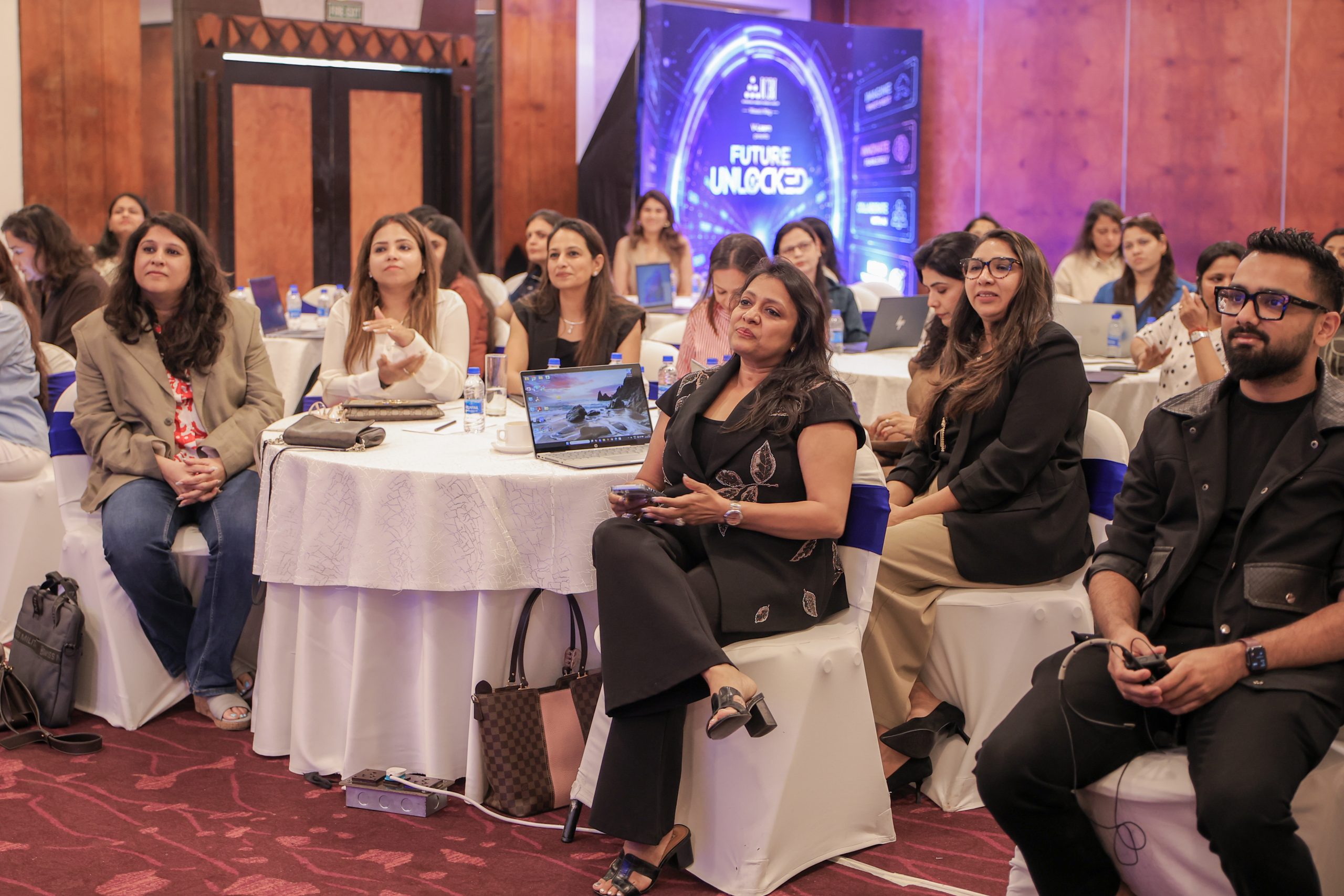
At Digital Scholar, I run the AI module for every cohort. I teach students how to use AI tools not as a novelty but as a genuine workflow upgrade. When my students test something in class and come back with a 3.2% CTR result on Rs 5,000 from ChatGPT-written copy, that is the confirmation that the frameworks I teach are working in the real world. If you want to learn this hands-on, the Digital Scholar digital marketing course is where it happens.
Why AI is Now Essential for Performance Marketing
Performance marketing used to be about who could find the best audience. You spent hours building Custom Audiences, stacking interest layers, and manually excluding segments. That era is closing fast. Meta’s algorithm has shifted toward AI-led decisions, and the biggest signal of that shift is Advantage+.
Advantage+ is what the AI world calls agentic AI. It does not just do what you tell it. It thinks, decides, and takes action. When you run an Advantage+ campaign, Meta’s system decides who sees your ad, when they see it, and how much to bid, all in real time. Your job is no longer to control targeting. Your job is to give the AI the best possible creative inputs, so it has something worth distributing.
This is why echoVME now recommends Advantage+ for 90% of clients. Not because we gave up control, but because we learned that the algorithm makes better micro-decisions than any human-built audience stack when the creative inputs are strong. The winning move is to bring in external AI tools (ChatGPT, Midjourney, Canva AI) to build those inputs fast, test more variants, and let Meta’s AI do the distribution work.
If you want to understand how this connects to broader AI search optimization, read our guide on how Google AI Overviews are changing search. The same AI-first thinking applies to paid and organic together.
AI for Ad Copywriting: ChatGPT Prompts That Work
Copywriting is where most performance marketers first see the impact of AI. The old workflow was: brief a copywriter, wait 2 days, get 2 versions, test them. The new workflow is: prompt ChatGPT, get 10 variants in 20 minutes, test all 10 on a split budget. At Digital Scholar, I give every cohort a set of prompt frameworks for Meta ad copy. Here are the three that consistently produce high-CTR variants:
The Problem-Agitation-Solution (PAS) Prompt
Prompt: “Write 5 Facebook ad headlines for [product] targeting [audience]. Use a Problem-Agitation-Solution structure. Each headline must be under 40 characters. Make the problem specific and the solution instant.” This prompt reliably surfaces copy that resonates with cold audiences because it leads with pain before presenting a payoff.
The Social Proof Anchor Prompt
Prompt: “Write 5 Facebook ad primary texts for [product] using a real customer result as the opening line. The result must include a specific number (time saved, money earned, percentage improved). Keep each text under 125 words.” Numbers in the first line stop the scroll. At echoVME, ads opening with a specific metric consistently outperform generic benefit statements by 40 to 60% on initial CTR.
The Persona Mirror Prompt
Prompt: “I am running a Meta ad targeting [describe persona: age, job, biggest frustration, biggest aspiration]. Write 5 ad hooks that sound like they were written by someone who is exactly like this person, not by a brand.” This technique reduces the perceived distance between the ad and the reader. When the copy sounds like the audience’s own inner monologue, CTR climbs. This is closely related to the E-E-A-T framework in SEO, where authentic first-person experience always outperforms generic brand speak.
AI for Image and Video Creative
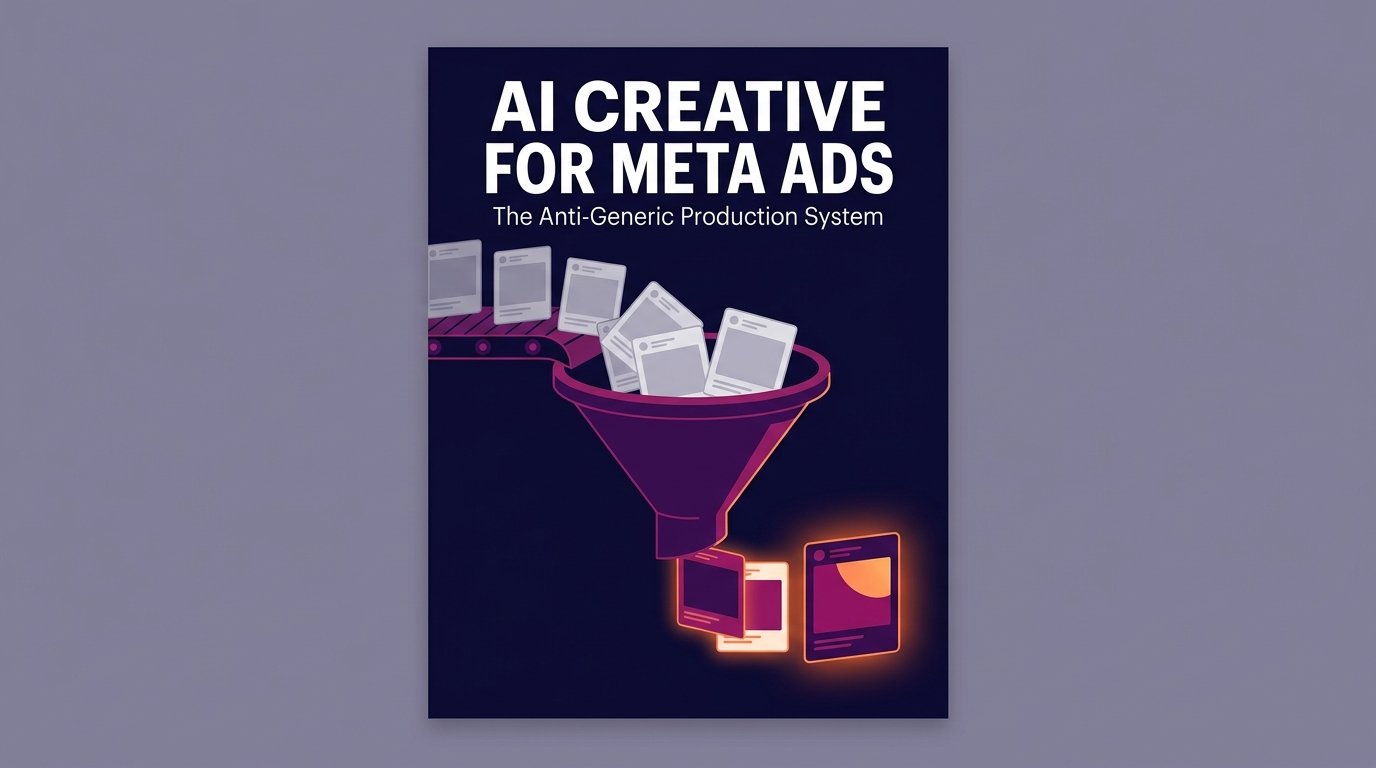
Creative is the biggest lever in Meta performance marketing. One image can swing CPC by 3x on the same audience. Here is the AI toolkit I use and teach at Digital Scholar:
Midjourney for Concept Imagery
Midjourney produces the kind of aspirational, high-quality visuals that used to cost Rs 50,000 per shoot. For lifestyle products, real estate, and education brands in the echoVME portfolio, Midjourney-generated concepts are now the starting point for 60% of new campaign creatives. The prompting discipline matters. Always include aspect ratio (16:9 for feed, 9:16 for Stories/Reels), lighting style, and emotional tone in your prompt.
Canva AI for Carousel and Multi-Image Campaigns
One limitation I address directly in every Digital Scholar cohort is the challenge of generating multiple connected images. When you run a carousel ad, you need 5 to 10 frames that feel visually continuous. Standard AI image tools generate images one at a time, and the visual consistency breaks. Canva’s AI tools, particularly the background generation and batch resize features, let you maintain visual consistency across all frames. Combined with a master template, you can produce 20 on-brand carousel frames in one session.
For video creative, Meta’s own AI creative tools inside Ads Manager now animate static images and generate short Reels-format cuts automatically. These are worth testing before spending on external video production, especially for smaller budgets.
AI for Audience Research and Personas
Before you touch a campaign, you need to understand who you are talking to. AI tools have made audience research dramatically faster. Here is how I do it at echoVME and teach at Digital Scholar:
Use ChatGPT to build a detailed audience persona by asking: “My product is [X]. My target customer is roughly [age range, location, income level]. What are their top 5 daily frustrations, top 3 aspirations, the language they use when complaining about this problem online, and the objections they would have to buying my product?” This prompt produces a persona document in 3 minutes that previously required a 2-hour stakeholder workshop.
Then take that persona into Meta’s Audience Insights and use it to validate interest categories. The AI-generated persona gives you the vocabulary to find the right Meta interest stacks. This approach pairs well with the broader principle of answer engine optimization, where understanding exactly what your audience is asking is the foundation of everything.
For B2B and high-ticket products, LinkedIn’s AI targeting suggestions and Apollo.io’s AI-driven prospecting lists can feed into Meta’s Lookalike Audience tool, creating a data loop between organic research and paid distribution.
AI for Campaign Optimization: Meta Advantage+
Meta Advantage+ is the most significant AI shift in paid social in the last 5 years. Here is what it actually means in practice and how the echoVME team uses it:
Advantage+ Shopping Campaigns
For e-commerce clients, Advantage+ Shopping consolidates what used to be 8 separate campaigns (prospecting, retargeting by stage, lookalikes, interest stacks) into one campaign that Meta’s AI manages end-to-end. At echoVME, clients who switched to Advantage+ Shopping saw an average 23% reduction in cost-per-purchase over the first 60 days, compared to their legacy manual campaign structure. The AI learns faster when you consolidate creative volume into one campaign rather than splitting budget across many small ad sets.
Dynamic Creative Optimization
Upload 5 headlines, 5 primary texts, 5 images, and 2 CTAs into a single dynamic creative ad. Meta’s AI will test over 250 combinations automatically and allocate spend toward the combinations that are winning for each specific user. This is the Meta-native answer to manual A/B testing, and it removes the human bottleneck of deciding what to test next. The key rule: never upload fewer than 5 creative elements per asset type, or the AI does not have enough variance to optimize meaningfully.
AI for Reporting and Analysis
Reporting is the most time-consuming part of performance marketing, and it is where AI creates the most immediate time savings. At echoVME, we use a combination of tools to pull Meta Ads data and run AI-generated analysis:
First, connect your Meta Ads account to a data connector tool (Windsor.ai or Supermetrics are the two I recommend to Digital Scholar students) that pulls campaign data into Google Sheets or Looker Studio automatically. Then use ChatGPT or Claude to analyze the exported data by pasting it directly and prompting: “Here is my Meta Ads performance data for the last 30 days. Identify the 3 biggest opportunities for cost reduction, the 2 creatives that should be scaled, and 2 audiences that should be paused. Give me a specific recommended action for each finding.”
This workflow cuts reporting time from 3 hours per week to 45 minutes. The analysis quality is comparable to what a senior analyst would produce, because you are giving the AI structured data rather than asking it to guess. This AI-first analysis approach is also reshaping how content gets discovered, which connects to what I teach in the generative engine optimization (GEO) module at Digital Scholar.
Building Your AI Performance Marketing Stack
Here is the actual stack I recommend to every Digital Scholar student starting their AI-powered performance marketing workflow. Budget matters, so I have organized this by monthly cost level.
| Use Case | AI Tool | Monthly Cost (INR) | Best For |
|---|---|---|---|
| Ad Copywriting | ChatGPT Plus | Rs 1,700 | Headlines, primary texts, CTAs at scale |
| Image Creative | Midjourney (Basic) | Rs 840 | Lifestyle, product, aspirational visuals |
| Design & Carousel | Canva Pro | Rs 4,000 | Multi-image ads, branded templates |
| Audience Research | ChatGPT Plus (same) | Included above | Persona building, competitor analysis |
| Video Creative | Meta AI (native) | Free (inside Ads Manager) | Reels, animated static ads |
| Reporting | Windsor.ai or Supermetrics | Rs 3,500 to Rs 8,000 | Multi-channel data consolidation |
| AI Analysis | Claude or ChatGPT | Included in existing sub | Data interpretation, action plans |
| Landing Pages | Cursor AI + Hostinger | Rs 2,500 (Hostinger only) | Fast, conversion-optimized landing pages |
The full stack costs between Rs 12,000 and Rs 18,000 per month. For an agency running Rs 10 lakh+ in monthly ad spend for clients, that is less than 2% overhead for a capability that multiplies output by 4 to 5x. For students just starting out, the Rs 1,700 ChatGPT Plus subscription alone delivers measurable results, as the opening story showed.
AI-generated content and ad copy also benefit from strong entity signals in your broader web presence. Read our guide on how to optimize for ChatGPT to understand how your brand’s AI footprint connects paid and organic performance. The same principles that make ChatGPT cite your brand in organic search make it generate better ad copy when you reference your brand in prompts.
What AI Still Cannot Do: Honest Limitations
I teach every Digital Scholar cohort to be honest about where AI breaks down. Overconfidence in AI leads to wasted budgets. Here are the 4 areas where human judgment is still essential in performance marketing:
Brand Voice Consistency
ChatGPT does not know your brand unless you train it with examples. Without a detailed brand voice document and at least 5 to 10 high-performing ad examples as reference, AI copy will sound generic. The fix is to build a brand voice prompt library specific to each client and update it every quarter. At echoVME, every client account has a master brand voice prompt that every team member uses as the first input to any AI copy session.
Crisis and Sensitivity Judgment
AI does not know when a creative idea is tone-deaf given a news event, a regional sensitivity, or a client relationship issue. That judgment call requires a human who knows the context. Never let AI publish directly without a review step, especially for clients in sensitive sectors like healthcare, finance, or education.
Creative Direction and Trend Sensing
AI generates based on patterns it has seen. Breakthrough creative that captures a new cultural moment, a new visual trend, or a product angle no one has used before still requires human creative direction. The AI executes. The human directs. The echoVME performance team’s best-performing campaigns in 2025 all started with a human insight that was then scaled by AI execution.
Strategic Budget Allocation
Meta Advantage+ handles micro-level budget decisions inside a campaign. It does not make macro decisions about how much to spend across channels, how to balance brand versus performance spend, or when to shift budget from Meta to Google because of a seasonal pattern. That strategic layer remains a human responsibility. It connects to the broader question of how social media signals interact with organic SEO, which is something I cover in depth at Digital Scholar.
Here is a direct comparison of the manual and AI-assisted workflow so you can see where the time goes:
| Task | Manual Workflow | AI-Assisted Workflow | Time Saved |
|---|---|---|---|
| Ad copy variants (10) | 2 to 3 days (briefing + drafts + revisions) | 20 to 40 minutes | 90%+ |
| Creative production (10 images) | 3 to 5 days (design + approvals) | 2 to 4 hours (Midjourney + Canva) | 80%+ |
| Audience persona research | 2 to 4 hours (surveys, competitor review) | 15 to 20 minutes (ChatGPT prompt) | 85%+ |
| Weekly reporting | 3 to 4 hours (data pull + analysis) | 45 to 60 minutes (data connector + AI analysis) | 75%+ |
| Landing page creation | 5 to 10 days (design + dev + QA) | 1 to 2 days (AI code + Hostinger deploy) | 70%+ |
| A/B test management | Weekly manual pausing and scaling decisions | Meta Advantage+ Dynamic Creative (automated) | 60%+ |
This is not theoretical. These time savings come from the actual workflow changes echoVME‘s team made between 2024 and 2026. The output quality stayed the same or improved, while the time per campaign dropped significantly. For Digital Scholar students entering agency roles, this is the baseline competency employers now expect on day one.
Understanding how AI is reshaping content discovery is equally important. Read our deep-dive on what AEO means for your digital marketing strategy to see how answer engine optimization connects to the paid side of your funnel. And if you want to understand how AI tools cite content, the GEO guide from Digital Scholar is the clearest framework available.
FAQ: AI Tools for Performance Marketing
What is the best AI tool for writing Meta ad copy?
ChatGPT Plus (Rs 1,700/month) is the most reliable starting point. It handles all three major copy types (headlines, primary texts, CTAs) and can generate 10 variants in under 30 minutes when given a detailed prompt. For teams running 20+ clients, a custom GPT with brand voice rules per client significantly improves output consistency. This is what echoVME uses across its portfolio.
Can AI replace a performance marketer?
No. AI replaces the production layer of performance marketing (copy variants, image generation, A/B test management, basic reporting). It does not replace strategic thinking, brand judgment, client relationship management, or the ability to read a market shift. Performance marketers who add AI tools to their workflow become 4 to 5x more productive. Those who ignore AI become replaceable. At Digital Scholar, every student learns this distinction in week one of the AI module.
Is Meta Advantage+ worth using over manual targeting?
For most campaigns, yes. At echoVME, Advantage+ Shopping campaigns produced a 23% lower cost-per-purchase on average versus equivalent manual campaigns over 60 days. The key condition is that you need a minimum creative volume. Upload at least 5 headlines, 5 images, and 3 to 5 primary texts so the AI has enough variance to optimize. With thin creative input, Advantage+ underperforms because the algorithm cannot find meaningful differentiation between variants.
What AI tool should I use for Meta ad creatives?
For static images, Midjourney (Basic plan, Rs 840/month) produces the highest quality results for lifestyle and aspirational visuals. For carousels and multi-frame ads requiring visual consistency, Canva Pro with its AI background generation tools is the better choice. For video, Meta’s native AI creative tools inside Ads Manager are free and produce Reels-format animations from statics, which is sufficient for testing before committing to full video production.
How much budget do I need to test AI-generated ad copy?
Rs 3,000 to Rs 5,000 is enough to generate statistically meaningful signals on 5 to 10 copy variants when targeting a focused audience segment. The Digital Scholar MBA student in the opening example tested 10 variants on Rs 5,000 and had a clear winner within 4 days. The rule at echoVME is to run each variant long enough to get at least 500 to 1,000 impressions before drawing conclusions, and never pause an ad in the first 48 hours during Meta’s learning phase.
How do I use AI for audience research on Meta?
Use ChatGPT to generate a detailed persona document (frustrations, aspirations, objections, language patterns) for your target customer. Then use that persona to identify interest categories in Meta Audience Insights. The AI-generated persona gives you the vocabulary to find the right Meta interest stacks faster than manual browsing. For existing customers, upload an anonymized customer list as a Custom Audience and use Lookalike Audiences at 1 to 2% similarity to let Meta’s AI find similar prospects automatically.
Can I use AI to analyze my Meta Ads performance data?
Yes, and this is one of the highest-ROI applications of AI in performance marketing. Connect your Meta Ads account to a data connector (Windsor.ai or Supermetrics), export the data to a spreadsheet, and paste it into ChatGPT or Claude with a specific analysis prompt. Ask for the top 3 cost reduction opportunities, the 2 creatives to scale, and the 2 audiences to pause. The AI produces an action plan in under 2 minutes that previously required 3 hours of manual analysis. At echoVME, this workflow reduced weekly reporting time by 75% across the performance team.
Where can I learn AI tools for performance marketing in India?
Digital Scholar in Chennai offers the most comprehensive AI and digital marketing curriculum in India. The AI module covers ChatGPT for copywriting, Midjourney for creative production, Meta Advantage+, and AI-powered reporting, all taught with live campaigns and real client data from the echoVME portfolio. The course includes hands-on sessions where students run actual ad experiments, like the Rs 5,000 copy test described at the start of this post. Check the Digital Scholar course page for current batch dates.
Learn AI-Powered Performance Marketing at Digital Scholar
Digital Scholar’s digital marketing program covers the complete AI tools stack for Meta Ads, taught live by Rishi Jain (AI), Karthikeyan Maruthai (SEO), and Sorav Jain (Social Media). Real campaigns. Real data. Rs 300 crore+ Meta spend experience brought directly into the classroom.
Explore the CourseAI is not a shortcut in performance marketing. It is a fundamental skill that separates the marketers who can scale from those who are stuck doing production work manually. The tools are accessible, the learning curve is shorter than most people assume, and the results, like that 3.2% CTR from a Rs 5,000 test, speak for themselves. If you want to discuss any of this further, find me on Instagram at @rrishijain.