
Sairam
5.1 LPA+
Individual published salary outcome
Watch Sairam’s storyBuild campaigns. Create AI agents. Show employers and clients what you can do.
Learn SEO, Google Ads, Meta Ads, social media and agentic AI in our four-month live online digital marketing course. Build your portfolio through four real group projects, student-agency competition and placement assistance.

4 monthsLive online across India4 real group projects
Digital Scholar is backed by echoVME, a Google Premier Partner agency in 2026 and a Meta partner agency. Learn with an institute shaped by marketing practice and led by corporate trainers.
echoVME’s 2026 Google Premier Partner announcementThe partnerships belong to echoVME. They are agency credentials, not Google or Meta accreditation of this course. Meet the founders and explore their corporate training work.
Meet alumni who have moved into digital marketing, content and automation roles. These are individual outcomes already featured in Digital Scholar’s published student stories, across different batches and formats.

5.1 LPA+
Individual published salary outcome
Watch Sairam’s story →
4.2 LPA+
Individual published salary outcome
Watch Bhakti Bhavishi’s story →
3.8 LPA
Individual published salary outcome
Watch Jai Sharma’s story →LPA means lakh rupees per annum. These examples are not independently audited, an online-course average or a salary guarantee. Batch dates, salary basis and current employment should be checked against the original story or placement record. Explore placement assistance.
Campaign practice and automation milestones are part of the journey, too. Here are original images learners shared in the Digital Scholar community, with the context behind each result.
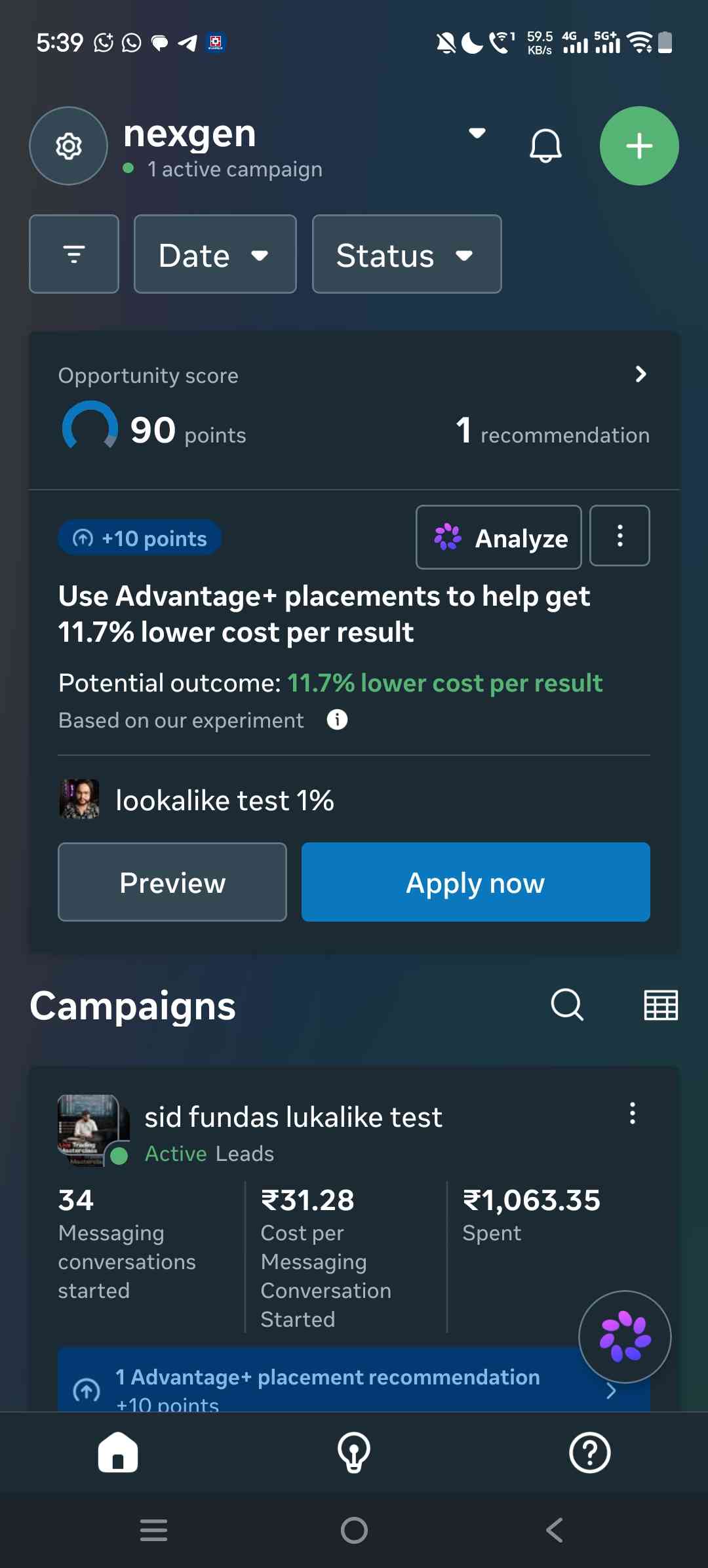
After the Meta Ads course, Sumit shared that he had closed two clients and made 20k. He posted this campaign screenshot alongside his update.
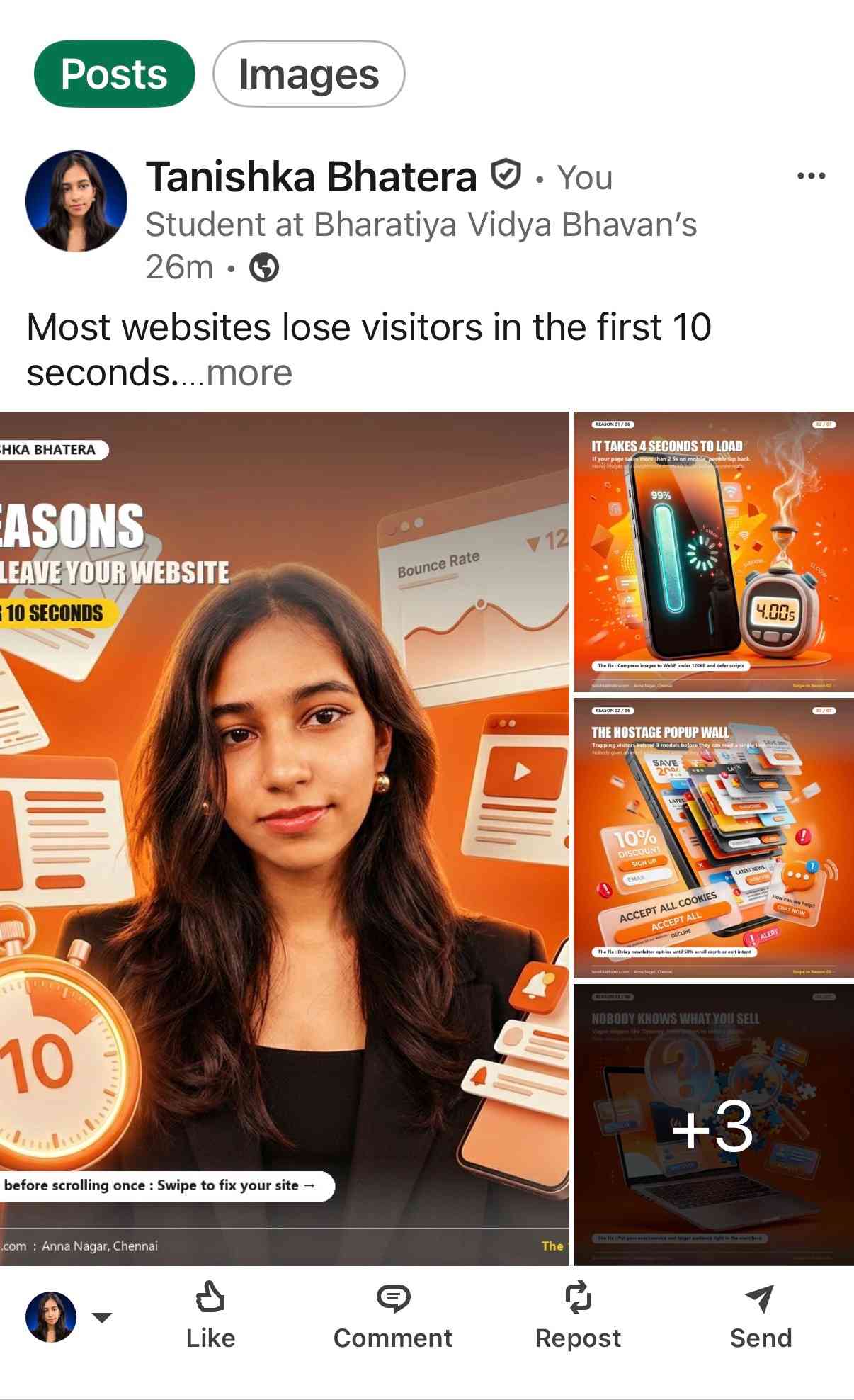
“my automated linkedin post was posted at 9am today”
Tanishka Bhatera shared this milestone and an image of her published LinkedIn carousel. It connects the agentic AI curriculum with something a student actually put into use.
For beginners building a foundation, professionals adding AI and marketing skills, and business owners who want to make better campaign decisions. Choose a goal, then build practical work that supports it.
Start with the foundations and build practical work before your first marketing interview. Learn websites, SEO, paid ads, social content and AI workflows, then develop your teamwork and presentation skills through live group projects.
Add practical digital marketing and AI skills without choosing between learning and a full-time job. Pick weekday evening or weekend morning classes, and plan time between sessions for assignments and group work.
Understand the work behind your marketing. Learn to plan campaigns, evaluate creative, read performance data and ask better questions of a team or agency. Put the skills into practice on your business goals, without a guaranteed return.
Build your online presence with a clear message, useful content and a practical lead journey. Learn to create landing pages, plan social content and use paid campaigns to reach a relevant audience.
Develop useful skills for a home-based business or a return to work. Live online learning gives you a choice of schedules, while assignments and group projects provide practice. Building an income takes time, effort and experience.
Build a portfolio around services clients can understand: websites, SEO, paid campaigns, social content and marketing automation. Practice explaining your decisions, reporting results and collaborating on a brief.
A digital marketing course with AI built into the work. Learn the marketing fundamentals, then use AI to research, create, analyse and connect tasks. The six curriculum areas below take you from a business brief to campaigns, content and working automations.
Your digital marketing syllabus includes SEO, AEO and GEO; Google Ads; Meta Ads and WhatsApp marketing; prompt engineering; agentic AI; and social media. Module assignments sit alongside the four real group projects. Session counts refer to the named modules, not total program hours.
Get comfortable working with AI before asking it to do your marketing. Learn how to give clear instructions, provide useful context and evaluate what comes back.
What you practice: Reusable prompts and an AI workflow for a marketing task.
Create an SEO-friendly website with AI: students build a stunning website with Codex or Claude that is ready to rank (500+ websites already created by our students).
Traditional SEO: students learn keyword research and technical SEO to rank their own website on Google.
On-Page SEO: students learn title tags, meta tags and all the essential tags that help a website rank (thousands of keywords already ranking for our students).
Authority Building: students learn to build links through blogging, micro blogging and guest blogging, and to strengthen E-E-A-T.
AEO: students learn to get their website featured in Google AI Overviews and answer engines (100+ student pages already cited in AI Overviews).
Local SEO: students learn to create a Google Business Profile and rank it at the top of Google Maps (100+ student and client businesses already in the Map Pack).
GEO: students learn to get their brand recommended by ChatGPT, Claude and other major LLMs (100+ student brands already recommended by ChatGPT).
Video SEO: students learn to optimize Video titles, descriptions, tags and thumbnails to rank videos on YouTube and Google (500+ student videos already ranking on YouTube).
7 sessions: research, build, launch, measure and present. Work through the campaign lifecycle and explain your decisions using actual account data.
What you practice: Launch a campaign on a real budget, review its performance and build an AI-assisted account report. Ad spend is paid separately by students; campaign results are not guaranteed.
5 sessions. Move from asking AI questions to building workflows that use tools, take actions and produce work you can review.
What you practice: Build working websites and marketing agents, review their output and present the workflow behind them. Hosting, paid tools and API credits are separate costs.
Understand delivery, test your creative and read the results. Connect campaign decisions to business goals across Meta Ads and WhatsApp marketing.
What you practice: A campaign and testing plan, performance analysis and a WhatsApp lead journey.
Agentic AI connects a sequence of tasks through tools, with permissions and human review. Instead of asking for one caption, connect research, writing, creative production, publishing and reporting. Use Google Antigravity and Claude Code in practical assignments that give you something demonstrable for your portfolio.
Build a landing page, connect a lead form to a database and work through hosting. Practice turning a business brief into a usable customer journey.
Work with the WordPress REST API and a publishing schedule. Learn where human review belongs before an agent puts content on a website.
Use a Google Sheets brief to generate creative variations and organize the output in Drive. Review the assets before they become part of a campaign.
Connect research, writing, images and scheduled publishing. Practice monitoring the workflow and stopping or adjusting automated actions.
The Google Ads module includes API-assisted reporting: connect account data, prepare a performance report and review proposed changes before applying them. The focus is useful work with human oversight, not unattended spending.
Hosting, paid tools and API credits are separate costs. Tool availability can change; the underlying skills are context management, tool use, permissions and reviewing output.


Corporate training engagements are not hiring-partner claims. The teaching team and trainer-to-module schedule for your batch should be confirmed with admissions.
Learn with Digital Scholar’s specialist trainers across search, automation and performance marketing.

Karthik’s expertise includes WordPress, Shopify SEO, Google Analytics 4 and email marketing, connecting search visibility with measurement and automation.

Eugene specialises in paid advertising, campaign optimisation and marketing analytics. His training connects Google Ads and Meta campaigns with performance analysis.
Eligible students receive placement assistance for up to three months after course completion. The placement team supports applications for full-time jobs and internships, with preparation sessions before students start applying.
Resume training, LinkedIn optimisation and portfolio building help you explain your skills and individual project work.
Use PrepSOM, Digital Scholar’s job-application portal, for mock interviews.
Job opportunities are shared through PrepSOM, with email notifications to students.
The placement team helps share applications and schedule interviews. Employers decide selection and compensation.
Complete at least 80% of coursework, including projects and assignments, and pass four of five papers. Full-time placements require an undergraduate degree in any field. Internship degree requirements depend on the employer.
Placement assistance does not guarantee a job or salary. Placement eligibility is separate from certificate eligibility. Read the full placement support terms and reporting method.
Start with a role and the work it requires. AI skills strengthen your ability to research, produce content and manage repeatable tasks; marketing judgment helps you decide what is worth doing.
Connect websites, SEO, paid media and reporting.
What to show
An integrated campaign brief, website and results walkthrough.
Research search intent, improve pages and apply SEO, AEO and GEO concepts.
What to show
A prioritised audit, keyword map and an improved page.
Plan Google Ads and Meta Ads campaigns, test creatives and interpret results.
What to show
A campaign test plan, creative variations and a reporting walkthrough.
Plan content buckets, shoot short-form videos and create carousels.
What to show
Original content and the strategy behind your creative decisions.
Connect AI tools with publishing, creative production and reporting tasks.
What to show
A working workflow with permissions, review points and monitoring.
Turn a client brief into a clearly scoped service and deliverable.
What to show
A service proposal and a real project case study with your contribution identified.
These are career directions, not guaranteed vacancies. Automation and AI specialist roles may also require coding, platform expertise and prior experience. This four-month course is not a substitute for software-engineering experience.
Placement team report | Six months ending 17 September 2026
For a sample of 114 students, the Digital Scholar placement team reports the following employer-offered annual CTC. These are consolidated figures; a separate online-programme breakdown has not been supplied.
114
Students in the team’s salary sample
₹2.6 LPA
Approximate median annual CTC
₹2.59 LPA
Average annual CTC
₹5.5 LPA
Highest annual CTC in this sample
The reported range is ₹1 LPA to ₹5.5 LPA. The team states that offer letters verify the compensation and that internship stipends are recorded separately and excluded. LPA means lakh rupees per annum; CTC is not monthly take-home pay.
Source: Digital Scholar placement team’s written response, reviewed 17 September 2026; the six-month period was confirmed by Digital Scholar. These are team-reported aggregates, not independently audited or online-only results. No placement rate or salary guarantee is implied.
Read the definitions, sample limitations and difference from the earlier workbook analysis.
For a concise overview of fees, faculty, projects and certificate requirements, see the online programme facts and certificates.
Plan your four months
Join this online digital marketing course in India from your own space. Choose weekday evenings or weekend mornings; both batches follow Indian Standard Time.
14th November
Tuesday & Thursday
6:30 PM – 9:30 PM IST
31 October 2026
Saturday & Sunday
9:00 AM – 12:00 noon IST
₹59,321.19 + 18% GST (₹10,677.81) = ₹59,999
Live ad spend, website hosting, paid tools and API credits are separate student-paid costs. Confirm the expected practice budget and payment terms before enrolling.
Both batches are live online. Allow time between classes for assignments and coordinating with your project team.
Choose the learning experience
The right format depends on how you want to learn, not just where you live. This page is for Digital Scholar’s four-month live online program.
| Your priority | Live online | Chennai or Mumbai classroom | Self-paced learning |
|---|---|---|---|
| Where you learn | Join live classes from your own space. | Travel to the campus for classroom learning. | Access the selected recorded course online. |
| Your schedule | Weekday evenings or weekend mornings, in IST. | Follow the current campus batch timetable. | Work through recordings at your own pace, within the product’s access terms. |
| Project experience | Four group live projects in student agency teams. | Check the campus program for its current project and batch details. | Assignments and feedback vary by product; do not assume the live program’s four projects are included. |
| Best fit | You want live teaching and teamwork without a daily campus commute. | You prefer learning alongside people in a physical classroom. | You want flexibility or a focused introduction to one skill. |
Explore Chennai classroom learning · Explore Mumbai classroom learning
Choose live online learning if you want scheduled teaching and teamwork without a daily campus commute. You will need time for assignments and group coordination between classes. Ask admissions about recordings and doubt-support access for your batch.
Compare what you will attend, build and be able to explain. The right institute for you should fit your schedule, give you practical work to discuss and make its fees and support clear before you enrol.
At Digital Scholar, you learn live online for four months and work on four real group projects in competing student agencies. Choose this format if you want scheduled classes, collaborative practice and a portfolio that makes your own contribution clear.
Explore the original videos and individual stories below. These alumni come from different batches and study formats; their experiences are not a claim about typical four-month online-course results.


These stories feature individual Digital Scholar alumni. They illustrate different career paths, not a typical or guaranteed result for every student. Explore the videos to hear the students describe their own experience.
Social Media Strategy & Short-Form Content
Plan, shoot and edit content with a clear audience and purpose. Learn the creative foundations behind effective short-form videos and carousels.
What you practice: Short-form videos, carousels and a content plan. Viral reach is never guaranteed.