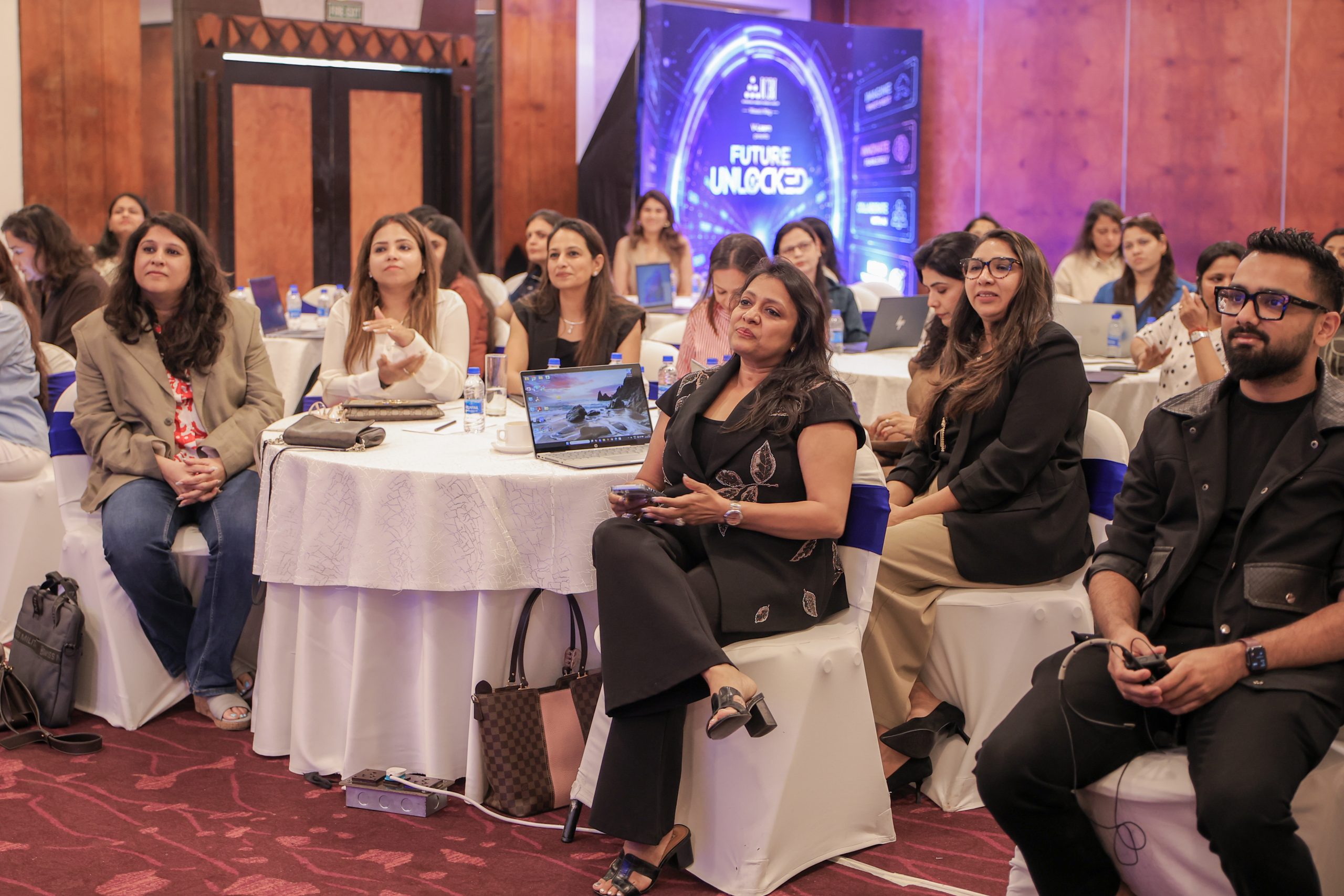

I led AI training for women entrepreneurs at ICBI in Kolkata, where more than 100 participants joined a workshop on AI and digital marketing. The session was part of Future Unlocked: An AI Masterclass, an initiative of the International Chamber of Business & Industry Women’s Wing under V-Learn.
As Co-Founder and CEO of Digital Scholar, I teach business owners and teams how to apply AI to the work in front of them. In this article, I want to share a piece of creative work connected to the ICBI session: a jewellery video ad I made for participant Tripti Mohta using Higgsfield and Codex. You can watch it below, examine its visual choices and use the accompanying worksheet to plan an ad for your own business.
Workshop at a glance: Rishi Jain, Co-Founder and CEO of Digital Scholar, trained 100+ women entrepreneurs in AI and digital marketing at ICBI Kolkata. This article includes event photographs, a 25-second jewellery ad created for a participant, and a practical AI marketing worksheet.
A jewellery video ad for an ICBI participant
Tripti Mohta was one of the participants. I created the following jewellery ad for her using Higgsfield and Codex. It is a useful example to examine because the finished film gives us something specific to discuss: how the jewellery is shown, where the viewer’s attention goes and what the closing frame communicates.
The film moves between a setting with warm, low lighting, shots of the earrings being worn and close views of their geometric details. It closes on the jewellery with the brand name. This sequence gives a business owner three decisions to think about:
- What should the viewer notice? The close-ups direct attention to the design. For your product, choose the detail a customer needs to see clearly.
- What does the wider shot explain? Seeing jewellery worn provides context that a product-only image cannot. A wider shot should add useful context to the detail shots.
- What should the viewer remember or do? The final frame introduces the brand. When adapting a film for a campaign, decide where an interested customer should go next and make that destination easy to find.
These are observations about the creative. To assess how well an ad performs, I would also need the campaign objective, distribution, spend and relevant results. The film on this page is an example of work produced, not a report of sales or advertising returns.
AI training for women entrepreneurs starts with their business
A business owner can be the person choosing products, answering enquiries and planning the next promotion. An AI exercise becomes useful when it connects those tasks. If the ad says one thing and the customer reply says something else, the owner still has work to fix.
The feedback I received after the session was positive. The event photographs show the learning environment and some of the people who took part.
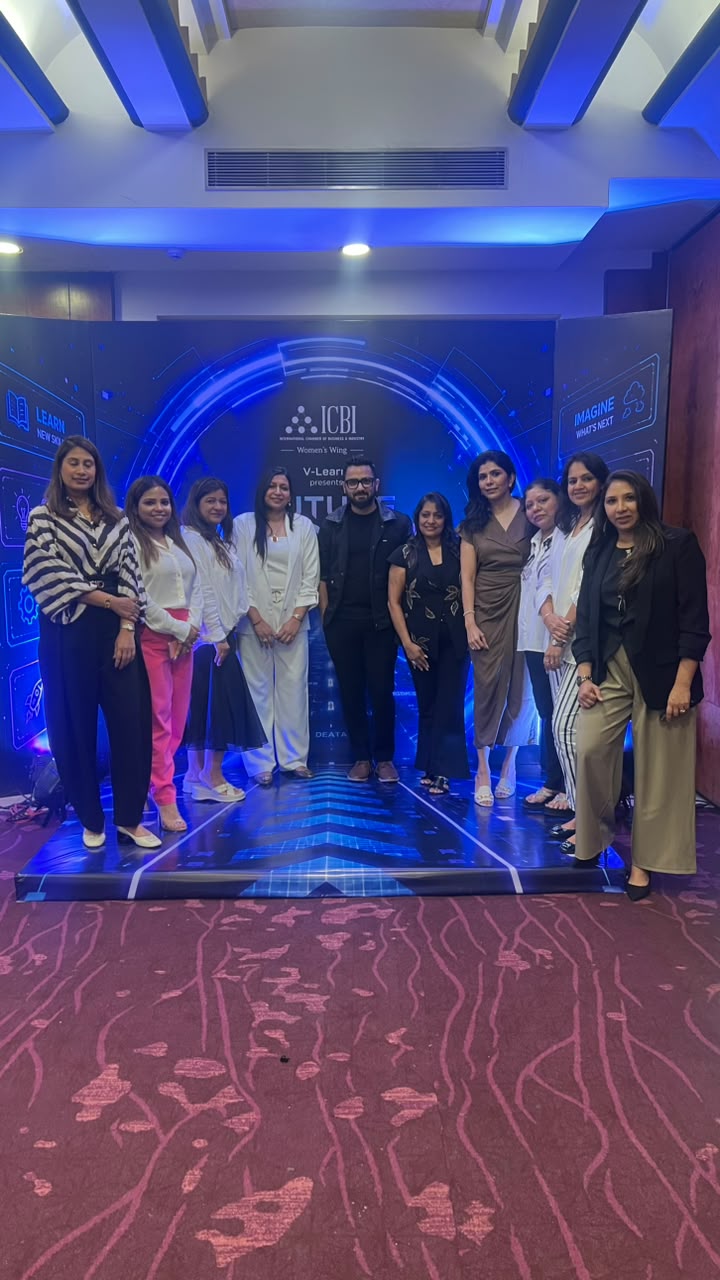
The exercises that follow are adapted from my wider teaching materials for readers to try. They are not a claim that every participant completed these exact tasks or that they reproduce the prompts used to make Tripti’s ad.
Write a brief that keeps the marketing accurate
One of the slides at the event made the point plainly: “Garbage in, garbage out.” A request such as “make a beautiful jewellery ad” leaves a lot for the tool to guess. It does not specify the actual product, the customer, the setting or the information the ad must preserve.
Before you generate an image or write a caption, collect these six things in one document:
- The product or service: What exactly are you promoting?
- The customer: Who is considering it, and for what situation?
- Confirmed facts: Which specifications, prices, availability details or policies can you support?
- The reference: Which original photograph or document shows the product accurately?
- The next step: Should the person enquire, book an appointment, visit a page or buy?
- What must stay unchanged: Product shape, colour, visible details, brand spelling and approved claims.
A source photo helps you check the output, but it does not guarantee that the generated version will preserve every feature. For jewellery, compare the shape, number of elements, stone placement and overall proportions across the shots. Apply the same discipline to packaging, garment details or food portions in other businesses.
Turn one product brief into a small campaign
Use the brief to connect a product post, a short video and a customer answer. Start with one product so that you can review the whole set without losing track of the facts.
Here is a prompt you can adapt. It is a reader exercise, not the original prompt used for the video above.
Use my product brief and reference materials to plan a small marketing campaign.

Customer: [who the product is for and their buying situation]
Confirmed product facts: [paste the facts]
Source photo or document: [attach or identify it]
Next step: [the real enquiry, booking or purchase destination]
Details that must stay unchanged: [list them]

Prepare:
1. One post that answers a customer question.
2. One post that explains a visible product detail.
3. A four-shot video outline. Give each shot a specific job.
4. A short reply to a likely enquiry.

Use only the supplied facts. Flag missing prices, policies or product details for me to confirm. Do not invent reviews, discounts or results.
Keep the language natural. Remove generic praise and em dashes.
Return drafts and a list of checks I should make before using them.
For example, suppose a customer wants to know how large a pair of earrings is. “Perfect for every occasion” does not answer that question. A confirmed measurement and a clear wearing shot would be more useful. If the measurement is missing from your brief, the next task is to obtain it, not to ask AI for a more convincing line.
My teaching materials on prompting, product-image briefs and document-based research all feed into this approach. The useful sequence is to collect the facts, create a draft and check it against the source. You can begin with a single document. A complicated automation setup is not required for this exercise.
A seven-day plan you can try
This is a suggested practice schedule. Adjust the pace to your business and the time you have available.
| Day | Task | What you should have |
|---|---|---|
| 1 | Choose one real customer question. | A specific question your content needs to answer. |
| 2 | Write the brief and check its sources. | Confirmed facts and a short list of missing details. |
| 3 | Draft a product-detail post. | A caption and image that communicate the same information. |
| 4 | Plan or make one short video. | A sequence in which each shot has a purpose. |
| 5 | Answer a buying question. | A reply that matches your actual product and policies. |
| 6 | Check the enquiry destination. | A working next step and someone ready to answer. |
| 7 | Review the work and responses. | Notes on corrections, useful enquiries and the next change. |
Your AI marketing campaign worksheet
Copy the fields below into a document and complete them for one product. Use the seven-day plan above to turn the brief into drafts, then review the results.
Product or service:
Customer and buying situation:
Confirmed product facts:
Source photo or document:
One action I want the customer to take:
Details AI must not change:
Missing facts to confirm:

Content to prepare:
- One answer to a customer question
- One product-detail post
- One short video outline
- One enquiry reply

Before use, check:
Product accuracy | Brand spelling | Claims | Phone readability | Working next step

After use, record:
Time spent, including corrections:
Useful enquiries or replies:
One change for the next version:
Check the product, the words and the next step
Watch the full video before approving it. A good opening frame can hide a changed product detail later in the sequence. Then view the creative on a phone, where small text and busy compositions become harder to read.
- Product: Does every shot match the original reference closely enough to represent what you sell?
- Words: Are the name, price, offer and policy details accurate?
- Continuity: Does the product remain consistent as the angle or setting changes?
- Next step: Does the link, contact option or booking page work?
- Reply: Can you answer the enquiry with the same facts the ad used?
Record the time spent on corrections as well as generation. If you publish the creative, note whether the responses are relevant to the product and whether people reach the intended next step. Those observations give you something useful to change in the next version.
Bring AI and digital marketing training to your organisation
The ICBI session is an example of AI training for an entrepreneur community. For a company’s marketing team, the starting point might be product content, campaign briefs or customer communication. The training should be built around work the group can recognise and review.
Digital Scholar also documents my AI corporate training for Dot & Key and AI workshop for Juniper Hotels and Hyatt. These offer other examples of the audiences and business contexts I work with.
If you are planning AI corporate training in Kolkata or a workshop for a business association, share your organisation, group size, location, preferred dates and one marketing task you want the group to work on.
Enquire about an AI and digital marketing workshop with Digital Scholar. You can also email info@digitalscholar.in.
For another set of exercises, read my ICBI workshop follow-up on customer replies, source-based FAQs and ad briefs.
Questions about the ICBI AI workshop
Who conducted the AI and digital marketing workshop at ICBI Kolkata?
Rishi Jain, Co-Founder and CEO of Digital Scholar, led the workshop for more than 100 women entrepreneurs. It was part of the ICBI Women’s Wing V-Learn initiative, Future Unlocked: An AI Masterclass.
What is the jewellery video shown in this article?
It is a 25-second jewellery advertisement that Rishi Jain created for Tripti Mohta, an ICBI workshop participant, using Higgsfield and Codex. The video is included as an example of creative work, with a discussion of its visual choices.
What should AI training for women entrepreneurs cover?
Start with a real business task: explaining a product, planning content or answering an enquiry. Useful training should include a clear brief, a draft participants can inspect, and checks for product accuracy and unsupported claims. The campaign exercise on this page follows that sequence.
Can a business owner try these AI marketing exercises without coding?
Yes. The brief, content plan and review exercise on this page can be started using ordinary language and your own product information. Video creation may require additional tools and practice, depending on the workflow you choose.
How can I book AI corporate training through Digital Scholar?
Contact Digital Scholar with your organisation, audience, group size, location, preferred dates and the work you want to improve. A useful starting point is one recurring marketing task, such as creating product content or answering customer enquiries.